
 az
az ru
ru

 EN
EN RU
RU Fire protection and smoke extraction systems
Types of Fire Protection Systems
Based on the extinguishing medium, fire protection systems are divided into the following groups:
Water-based fire suppression systems
(sprinkler and deluge systems) – these systems operate by directly spraying water onto the fire. Their advantage is high effectiveness in areas where there is a risk of rapid fire spread or where cooling of the facility is required.
Water mist fire suppression systems
These systems use water mist technology, breaking water droplets into particles smaller than 50 microns (µm). At high temperatures, these particles evaporate rapidly. This process cools the protected area and reduces oxygen concentration around the fire source. The advantage of these systems is lower water consumption and reduced risk of water damage or flooding.
Foam-based fire suppression systems
These systems work by covering or filling the burning area with foam, isolating it from oxygen. Foam systems are typically similar to water-based systems, where a foam concentrate is added to water and then mixed with air. At the discharge point, nozzles, ejectors, foam chambers, water-foam monitors, or foam outlets are used. Advantages include isolating the fire from fuel, cutting off oxygen, and preventing water saturation of the protected equipment.
Gas-based fire suppression systems
These systems work by displacing oxygen from the protected area and/or chemically interrupting the combustion process. Gas suppression is one of the safest methods for areas containing electronic equipment, as gases are non-conductive and do not damage electronics.
Powder-based fire suppression systems
These systems use the antikatalytic effect of fire-extinguishing powder, which stops the combustion process and extinguishes flames. They are less commonly used and are applied where other systems are not feasible or economically efficient. Their advantages include effectiveness in sub-zero temperatures and environmental safety.
Fire suppression equipment can also be classified based on the type of protected area. In large-volume facilities, water, foam, or water mist systems are typically used, while gas systems are applied in spaces up to approximately 1000 m³. In smaller facilities, deluge or water mist systems may be used.
Gas suppression systems or special solutions (such as Automatic Active Fire Suppression Lines) can be used to extinguish fires occurring during the operation of machinery and electrical equipment.
Passive Fire Protection
Another method of fire prevention is passive fire protection. This approach involves slowing down or stopping the spread of fire by using appropriate materials, equipment, and fire safety procedures in the building design.
The main elements of passive fire protection are Fire Detection and Fire Alarm Systems (FAS). This system includes:
-
Fire Alarm System (FAS)
-
Voice Evacuation System (VES)
The FAS system detects fire at an early stage and transmits the alarm to the control panel, which then notifies responsible persons or organizations.
The VES system is used to broadcast warning signals and voice announcements. These announcements are automatically activated when a signal is received from the fire alarm system.
Smoke Extraction Systems
Smoke extraction (SE) systems are designed to remove fire gases (smoke) from a space and replace them with fresh air to compensate pressure differences, ensuring survivability and breathable conditions for occupants.
Smoke extraction systems are divided into the following types:
-
Gravity systems
-
Mechanical systems
-
Hybrid systems
-
Overpressure systems
The gravity system uses convection – the principle that hot smoke rises upward.
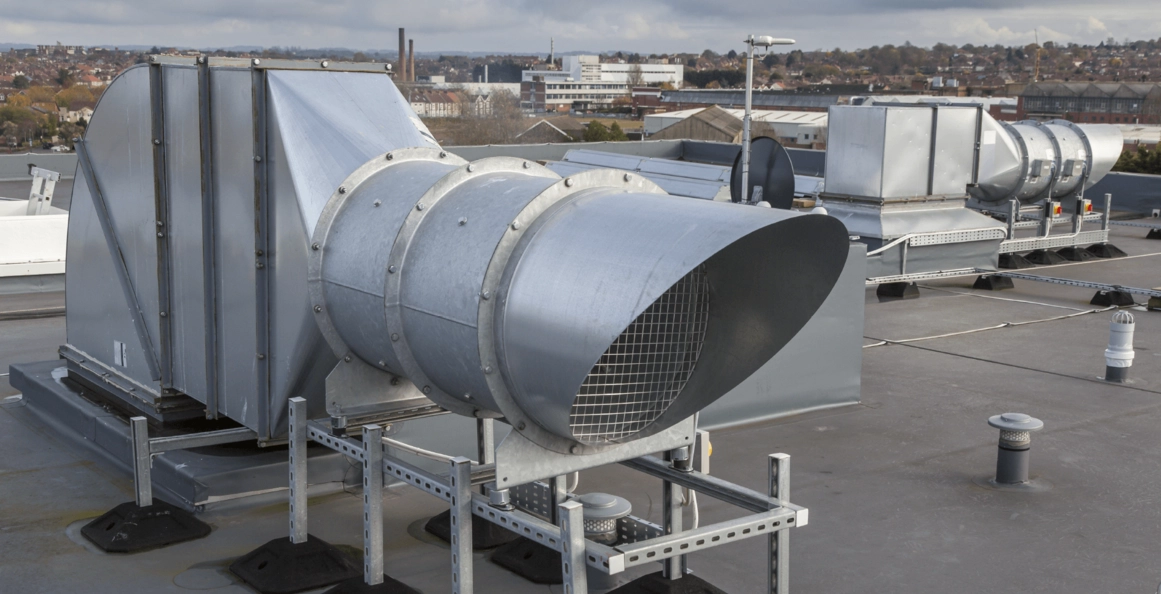
Mechanical systems remove fire gases using fans and jet devices.
Hybrid systems combine both smoke extraction and smoke control functions.
Overpressure systems prevent smoke from entering protected areas by controlling airflow direction and pressure differences, maintaining the highest pressure in evacuation routes.
Smoke extraction systems are also divided into ducted (vertical air ducts) and ductless (horizontal airflow / jet ventilation) systems.
Where Should Fire Protection Systems Be Applied?
These systems should be installed in all facilities where people are present and where goods produced by human activity are stored.
They are especially required in the following facilities:
-
Commercial and exhibition buildings
-
Theaters with more than 300 seats
-
Cinemas with more than 600 seats
-
Catering facilities with more than 300 seats
-
Sports and concert halls with more than 1500 seats
-
Hospitals with more than 200 beds
-
Psychiatric hospitals with more than 100 beds
-
Social and rehabilitation centers with more than 100 beds
-
Enterprises employing more than 100 people with disabilities
-
High-rise public buildings
-
Collective residential buildings with more than 200 beds
-
National archives
-
Museums and historical monuments
-
Server rooms and data processing centers
-
Telephone exchanges
-
Garages larger than 1500 m² or with multiple underground levels
-
Metro and underground railway stations
-
Stations with more than 500 people at the same time
-
Banks with customer areas larger than 500 m²
-
Libraries and archives containing rare publications
Components of Fire Ventilation Systems
A traditional ducted fire ventilation system consists of the following:
-
Ventilation ducts
-
Air grilles
-
Exhaust fans
-
Fire dampers
Special attention must be given to evacuation routes (stairs and garages).
Fire gases and smoke can intoxicate people and make evacuation impossible. Fire ventilation controls airflow and smoke movement so that smoke and gases are removed as quickly as possible, facilitating safe evacuation.
Types of Fire Ventilation Systems
Based on purpose and equipment used, systems are classified as follows:
SHEVS (Smoke and Heat Exhaust Ventilation System)
Removes the smoke layer accumulated under the ceiling and maintains a smoke-free zone, allowing safe evacuation.
Smoke and Heat Control System
Controls smoke between the fire source and the extraction zone, ensuring access for emergency services to the fire source.
Smoke Clearance (Dilution) System
Removes smoke and dilutes it with incoming replacement air, reducing its temperature and toxicity.